
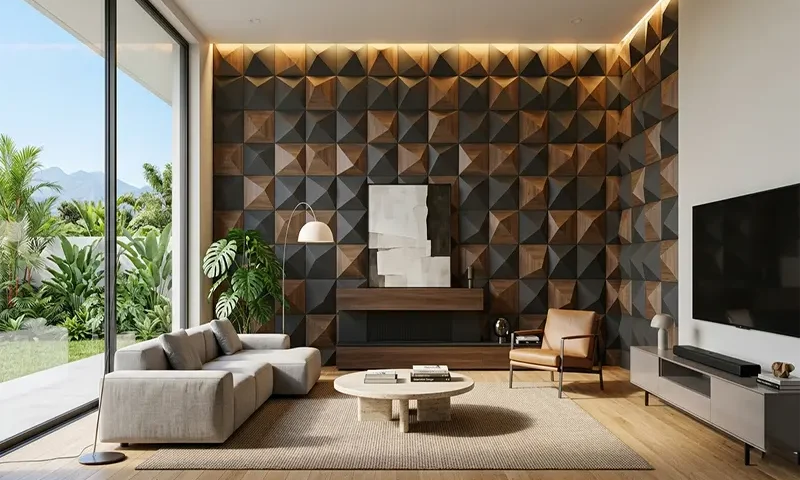
In the landscape of 2026 interior design, the “flat” wall is becoming a relic of the past. As we lean further into biophilic textures and organic modernism, homeowners are seeking ways to add architectural weight and tactile depth to their primary living spaces. 3D geometric wall paneling has emerged as the definitive solution, transcending traditional wallpaper by offering a physical, sculptural presence that changes throughout the day as light moves across the room.
A contemporary feature wall is no longer just a pop of color; it is a structural statement that serves as “functional art.”
2026 Material Innovation: Beyond the Basics
Selecting the right material is the first step in ensuring your feature wall looks high-end rather than temporary. Modern manufacturing has introduced composites that are more durable and sustainable than ever before.
Material Selection Comparison
| Material | Pros | Cons | Best Use Case |
| MDF & Wood Veneer | Natural warmth; high-precision CNC cuts; paintable. | Susceptible to moisture; heavier installation. | Luxury formal lounges and media rooms. |
| SPC (Stone Plastic) | Eco-friendly; waterproof; fire-resistant; extremely durable. | Limited color customizability (usually pre-finished). | High-traffic areas or homes with pets. |
| PVC & Plant Fiber | Lightweight; very affordable; easy DIY “Click-and-Stick.” | Can look “plastic” if not painted correctly; less impact-resistant. | Accent walls in apartments or secondary living zones. |
Five Cutting-Edge Geometric Patterns
1. Parametric Curves
Inspired by high-end fluid architecture, parametric patterns feature flowing, organic lines that mimic the movement of water or wind-blown sand. These panels are often seamless, creating a continuous wave across the entire length of a feature wall.
- Visual Impact: Softens the sharp angles of modern furniture.
- Lighting Tip: Use recessed ceiling washers to emphasize the “peak and valley” of each curve, creating a soft, ethereal glow.
2. Tessellated Hexagons
The honeycomb remains a staple, but the 2026 update involves varying depths. By using hexagons of different thicknesses, you create a “pixelated” topography that looks different from every angle.
- Visual Impact: Adds a mathematical, tech-forward energy to the room.
- Lighting Tip: Install backlit LED channels within a few of the deeper hexagons to create a futuristic “glow-from-within” effect.
3. Fractal Pyramids
Sharp, angular, and unapologetically bold, fractal pyramids use triangular projections to create dramatic shadows. This is the ultimate “light and shadow play” pattern. Depending on the direction of your light source, the wall can look like a series of mountain peaks or a futuristic armor plating.
- Visual Impact: Creates a strong focal point for a minimalist room.
- Lighting Tip: Side-mounted sconces are essential here. The low-angle light will cast long, dramatic shadows that accentuate the geometric sharp edges.
4. Integrated Slats & Flutes
This trend blends the traditional “wood slat” look with 3D geometric intersections. Imagine vertical oak slats that suddenly “fracture” into geometric diamonds in the center of the wall. It’s a perfect bridge between classic mid-century modern and contemporary futurism.
- Visual Impact: Adds height to a room through vertical lines while providing a central “artistic” disruption.
- Lighting Tip: Use floor-mounted uplights to catch the vertical ridges and draw the eye upward toward the ceiling.
5. The Metallic Drench
A major trend for 2026 is “mineral drenching.” This involves using geometric panels finished in matte gold, brushed copper, or deep iron. The 3D facets catch the light and reflect metallic glints throughout the room, eliminating the need for additional wall art.
- Visual Impact: Evokes a sense of opulence and industrial chic.
- Lighting Tip: Use warm-toned (2700K) bulbs to enhance the richness of gold and copper finishes, preventing the metallic surface from looking too “cold.”
Lighting as the “Secondary Material”
A 3D wall is only as good as the light that hits it. Without proper illumination, the shadows disappear, and you lose the very depth you paid for.
Grazing Lights
To maximize the texture of your panels, you must use “grazing” techniques. This involves placing LED strips or spotlights very close to the wall—either at the top or bottom—so the light “grazes” the surface at a narrow angle. This creates the deep shadows necessary for a 3D effect.
Internal LED Integration
Many high-end panel systems now come with integrated “glow channels.” These are thin gaps between geometric pieces designed to house micro-LED strips. This turns the entire feature wall into a primary light source for the room, perfect for creating a “cinema mode” atmosphere in media rooms.
Installation & Maintenance
Modern 3D panels have moved away from complex carpentry toward more user-friendly systems.
- Click-and-Stick Systems: Many PVC and SPC panels feature interlocking edges similar to laminate flooring. They can be applied directly over drywall with heavy-duty construction adhesive.
- Handling Corners and Outlets: This is where precision matters. Always use a miter saw for corner joins to ensure the geometric pattern remains continuous. For outlets, “extension rings” are required to bring the electrical faceplate flush with the new, thicker 3D surface.
- Dusting: Because of the ridges, 3D walls catch more dust than flat ones. A vacuum with a soft brush attachment or an electrostatic duster is the best tool for maintenance.
Functional Art for the Modern Home
3D geometric wall paneling is more than a decorative choice; it is a structural upgrade that alters the very DNA of a living room. By choosing a pattern that resonates with your personal style—be it the fluid grace of parametric curves or the aggressive geometry of pyramids—you elevate your home’s atmosphere and potential resale value. In a world of digital screens and flat surfaces, these architectural features provide a much-needed return to the tactile and the profound.

