
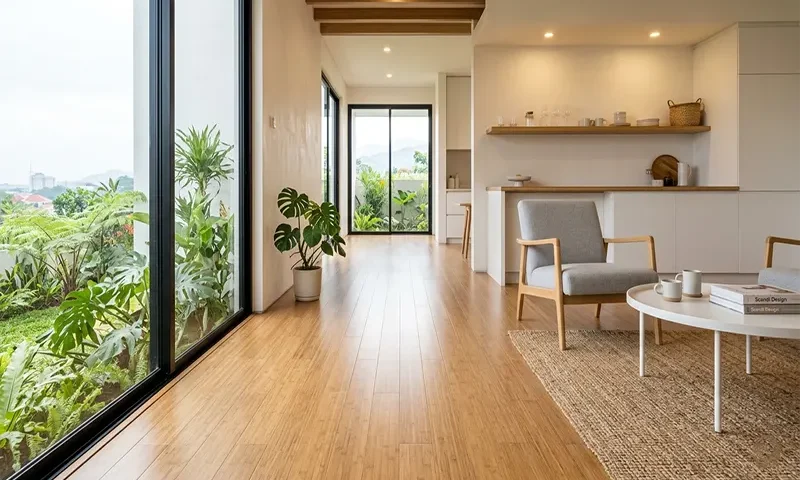
In the world of 2026 interior design, the Scandinavian aesthetic has evolved from stark, clinical white-on-white toward “Organic Modernism”—a style that prioritizes sustainable materials, tactile warmth, and the Swedish concept of Lagom (“just the right amount”). Central to this evolution is light carbonized bamboo flooring.
As a rapidly renewable resource, bamboo has always been eco-friendly, but the light carbonization process offers a specific amber-honey tone that serves as the perfect “Hygge” foundation, providing a warmer, more sustainable alternative to traditional White Oak or bleached Pine.
The Intersection of Sustainability and Style
To understand why light carbonized bamboo is so effective in Scandi-interiors, one must understand the process behind its color.
Technical Note: The Carbonization Process
Unlike stained wood, the color of carbonized bamboo is not achieved through dyes or pigments. Instead, the raw bamboo is placed in a large pressure steamer. The heat and pressure “caramelize” the natural sugars within the bamboo fibers, browning the material from the inside out. “Light” carbonization involves a shorter steaming cycle, resulting in a soft, glowing honey hue rather than a dark coffee tone.
Because the color is through-and-through, it will not fade or wear away like a surface stain, making it ideal for the longevity-focused Scandinavian home.
The Scandinavian Color Palette: Visual Warmth
Scandinavian design often relies on a muted palette: whites, “Greiges,” soft sages, and cool slate blues. While these colors create a sense of calm, they can easily feel cold or “hollow” if paired with grey or white floors.
Light carbonized bamboo provides Visual Warmth. Its amber undertones act as a thermal balance to cool wall colors, making a minimalist room feel lived-in and cozy without the need for excessive clutter. It mirrors the golden hour sunlight, even in the middle of a dark winter, which is a core principle of Nordic architecture.
Grain Selection: Vertical vs. Horizontal
The way the bamboo is sliced and pressed dictates the final “rhythm” of the floor.
- Vertical Grain: The bamboo strips are turned on their side before being pressed together. This results in a narrow, linear grain with very few visible “knuckles” (nodes). For a high-end, contemporary Scandinavian look, vertical grain is the gold standard as it emphasizes clean lines and verticality.
- Horizontal Grain: This style showcases the natural growth marks of the bamboo stalk. It is slightly more rustic and earthy, perfect for a “Scandi-Boho” or “Cottagecore” interior where organic imperfections are celebrated.
Design Ideas by Room
1. The Sun-Drenched Living Room
In a large living area, light carbonized bamboo reflects natural light beautifully. To achieve a modern look, pair the flooring with low-profile, light grey sofas and furniture with exposed light wood legs. The floor acts as a neutral canvas that allows the silhouettes of the furniture to stand out.
2. The “Hygge” Bedroom
Layering is key in the bedroom. Place a cream-colored wool or sheepskin rug over the bamboo. The contrast between the sleek, hard bamboo surface and the soft, organic texture of the rug creates a sensory-rich environment that promotes rest.
3. The Seamless Kitchen
Use bamboo to bridge the gap between functional white cabinetry and the dining area. Because light carbonized bamboo is available in waterproof click-lock varieties, it can handle the occasional kitchen spill while maintaining the “flow” of the home’s open-concept design.
Comparison: Light Carbonized Bamboo vs. Traditional Options
| Feature | Light Carbonized Bamboo | White Oak | Bleached Pine |
| Janka Hardness | ~1,100 – 1,300 lbf | 1,360 lbf | 690 – 870 lbf |
| Price Point | Competitive/Moderate | High | Low |
| Eco-Impact | Highly Renewable (5yrs) | Slow Growing (60yrs+) | Moderate |
| Color Stability | Very High | Moderate | Low (Yellows over time) |
Note: While natural bamboo is harder, the carbonization process slightly softens the fibers, bringing its Janka rating closer to that of Oak—still plenty durable for residential use.
Health and Safety: Indoor Air Quality
Scandinavian design is deeply rooted in health and well-being. When selecting your bamboo, ensure it meets the highest standards for indoor air quality:
- Low-VOC Finishes: Ensure the topcoat is a water-based or UV-cured finish.
- Formaldehyde-Free: Look for “NAUF” (No Added Urea-Formaldehyde) labels to ensure your home remains a sanctuary of clean air.
Scandi-Styling Checklist
If you are installing light carbonized bamboo, use this checklist to complete the look:
- [ ] Lighting: Use warm-toned (2700K) LED bulbs to enhance the amber floor.
- [ ] Furniture: Opt for light-colored woods (Ash, Birch, or Beech) for furniture legs to create a “tone-on-tone” effect with the floor.
- [ ] Textiles: Mix linen, wool, and jute in neutral tones.
- [ ] Greenery: Use large-leaf plants like Monstera or Fiddle Leaf Figs; the deep green leaves look stunning against the honey-toned bamboo.
Maintenance & Longevity
To maintain the soft glow of your carbonized floor:
- Avoid Steam Mops: The heat can affect the caramelized sugars and the adhesives over time.
- Dry Mop Regularly: Dust and grit are the primary enemies of the finish.
- Use Felt Pads: Scandinavian furniture often has thin, tapered legs that can gouge floors if not protected.
The Foundation of “Quiet Luxury”
Light carbonized bamboo flooring is more than just a surface; it is a foundational element of “Quiet Luxury.” It respects the environment through its rapid growth cycle while honoring the human need for warmth and serenity in the home. By choosing this material, you aren’t just following a trend—you are adopting a sustainable design philosophy that will keep your home feeling bright, balanced, and lagom for decades to come.

