
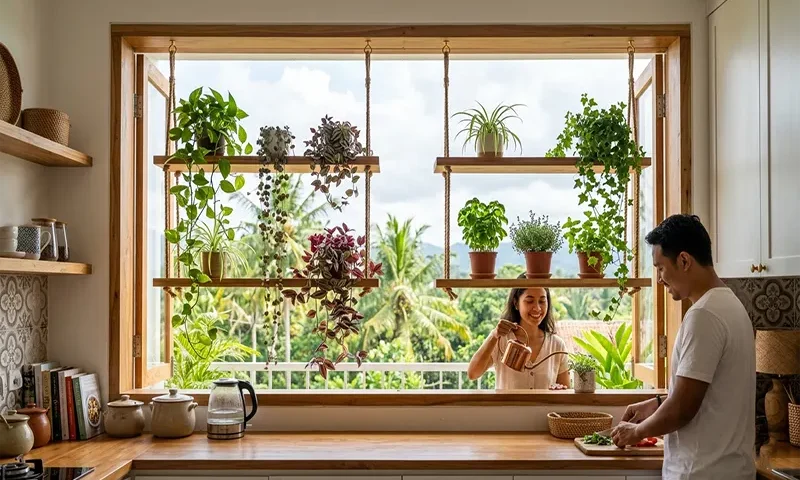
In the modern 2026 home, the kitchen has evolved into more than just a site for meal preparation; it is a sanctuary for wellness and biophilic connection. The “living curtain” trend—utilizing vertical window space to grow a lush canopy of greenery—has become the definitive solution for urban dwellers and suburbanites alike. By installing hanging plant shelves within your kitchen window frame, you maximize natural light exposure for your plants while reclaiming valuable counter space for your culinary pursuits.
Structural Integrity & Hardware: The Foundation of Your Garden
Before selecting your greenery, you must address the mechanical realities of suspending weight over your sink or workspace. Wet soil is surprisingly heavy, and a standard kitchen window shelf may need to support anywhere from 10 to 30 pounds.
Types of Mounting Systems
- Ceiling-Mounted Hooks: These are ideal for deep window wells. By drilling directly into the ceiling joists above the window, you can hang heavy timber or glass tiers without putting stress on the window casing itself.
- Tension Rods: A “renter-friendly” favorite, high-capacity tension rods can be wedged into the window frame. While easy to install, they have the lowest weight capacity and are best suited for lightweight plastic pots and herbs.
- Frame-Fixed Brackets: These involve screwing decorative brackets directly into the wooden side studs of the window frame. This is the most secure method for permanent installations.
Safety Warning: Avoid hanging glass shelves directly over high-heat areas like a stove. Rapid temperature fluctuations can cause glass to crack, and rising steam can damage certain plant species.
Four Creative Hanging Shelf Concepts
1. The Minimalist Glass Float
For a contemporary, “invisible” look, use clear acrylic or tempered glass shelves suspended by thin aircraft-grade steel cables. This design allows light to pass through the shelves, ensuring the rest of your kitchen remains bright while giving your plants the illusion of floating in mid-air.
2. The Rustic Ladder Tier
Perfect for the farmhouse kitchen, this concept uses small wooden rungs or reclaimed boards suspended by thick manila rope. The natural fiber of the rope adds a tactile, organic element that complements warm wood cabinetry.
3. The Macramé Hybrid
If you love the “Boho-Chic” aesthetic but find traditional macramé hangers too bulky for a window, consider a hybrid shelf. This involves a flat wooden disc or square integrated into a simplified macramé knotting system, providing a stable platform for your favorite ceramic pots.
4. The Industrial Pipe Rack
Install a black iron or copper pipe across the top of the window frame. Instead of a solid shelf, use “S-hooks” to hang individual pots at varying heights. This creates a modular, “curtain” effect that can be easily rearranged as your plants grow.
Selecting “Kitchen-Hardy” Plants
The kitchen is a unique microclimate characterized by higher humidity and occasional temperature spikes. Selecting plants that thrive in these conditions is essential for a successful window garden.
Best Plants for Kitchen Windows
| Plant Type | Light Needs | Difficulty | Aroma/Benefit |
| Basil | High (Direct) | Moderate | Culinary staple; fresh scent |
| Golden Pothos | Moderate | Easy | “Spiller” effect; air-purifying |
| Mint | High (Direct) | Easy | Rapid growth; great for teas |
| String of Hearts | Bright Indirect | Moderate | Delicate, trailing visual drama |
Light Management & Window Functionality
Not all windows are created equal. Your shelf arrangement should be dictated by the direction your window faces:
- South-Facing: The “Gold Standard” for herbs and succulents. These windows receive intense, all-day light.
- North-Facing: Best for low-light “spillers” like Pothos or Ivy. The light is consistent but never direct.
Ensure your shelf placement does not obstruct the window’s crank or handle. You should still be able to open the window for ventilation—essential for clearing out cooking smoke and providing fresh CO2 to your plants.
DIY Step-by-Step: The Basic Rope Shelf
You can build a functional, stylish hanging shelf in an afternoon with these five steps:
- Cut Your Plank: Use a 1×6 or 1×8 board cut to fit 1 inch narrower than your window width.
- Drill Corners: Drill a hole in each of the four corners, slightly wider than your chosen rope (usually 3/8 inch).
- Thread the Rope: Cut two long lengths of rope. Thread them through the holes so they loop under the board.
- Knot and Level: Tie sturdy knots under each hole. Use a spirit level to ensure the board is perfectly flat before tightening.
- Mount: Secure the top of the ropes to ceiling hooks or a sturdy rod installed at the top of the frame.
Maintenance & Watering Logistics
The biggest challenge with hanging shelves is the “drip factor.”
- Self-Watering Pots: These are highly recommended for window shelves. They feature a reservoir at the bottom, reducing the frequency of watering and preventing excess water from dripping onto your kitchen counters.
- Drainage Trays: If you prefer traditional pots, ensure they have deep, attached saucers.
- The Reach Factor: Keep a long-necked watering can or a small step-stool nearby to ensure you can reach the higher tiers without straining.
A kitchen window garden is more than a design choice; it is the “soulful” heart of the home. By elevating your plants into the vertical space of your window frame, you create a dynamic, ever-changing piece of art that purifies your air and provides fresh ingredients for your table. Whether you choose the sleek lines of glass or the rugged charm of a rope-hung plank, your hanging indoor plant shelf will transform your kitchen into a vibrant, living ecosystem.

