
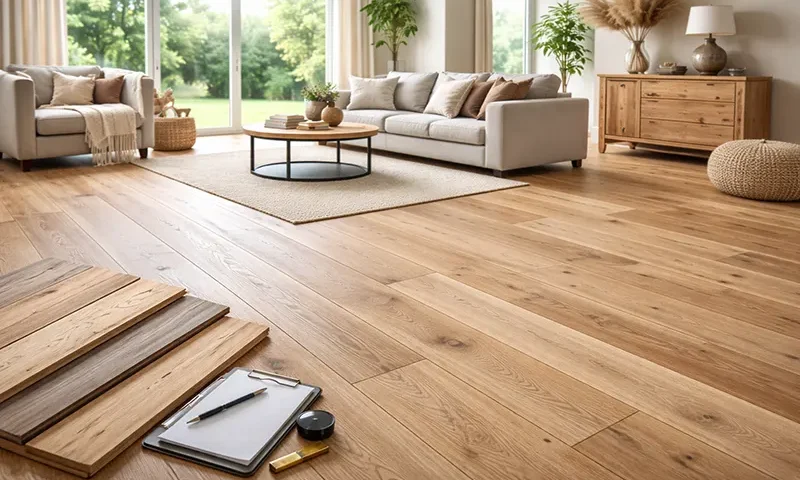
European oak wide plank floors look like they belong in a magazine spread where nobody owns socks and every room has “natural light” as a personality trait. In real life, they can still look incredible. They just require you to respect one stubborn fact: wide boards move more, and European oak often comes in formats that highlight every detail—for better and for worse.
So let’s go through the real pros and cons of European oak wide planks by Bergamo Floors. We will cover the causes of the common problems and how to buy in a way that keeps your floor from turning into a seasonal drama.
What counts as “wide plank” with European oak
You’ll see European oak commonly sold in widths of around five to ten inches, sometimes even wider. Many modern European oak collections lean heavily into wide and long boards because that’s part of the luxury look. Fewer seams, longer runs, and more grain movement create that calm, high-end feel.
The wider you go, the more you need to think about stability, subfloor prep, and indoor humidity. Narrow planks can hide a lot of sins. Wide planks put everything in 4K.
Why European oak wide planks look so good
Wide planks simplify the room visually. You see fewer lines cutting across the floor, and the space feels larger and more relaxed. This effect becomes even stronger in open concept homes where a narrow strip floor can look busy across a big span.
European oak also has a grain character that many people love. It often shows more variation than American white oak, and wide boards let that natural movement shine. When you pair that with a matte finish and some texture, you get a floor that feels modern, warm, and expensive in a quiet way.
Wide European oak planks also pair beautifully with modern design trends: natural tones, soft neutrals, minimal color palettes, black accents, and that whole “clean but cozy” vibe.
The biggest con: movement and seasonal gaps
Wood expands when humidity rises and shrinks when it drops. This happens with all hardwood. Wide boards show it more.
A wide plank can shrink enough in dry seasons that gaps become visible. Then, the humidity returns, the boards swell, and those gaps reduce. You may also see slight cupping if moisture comes from below or if humidity stays high for long periods.
This doesn’t automatically mean something went wrong. Some seasonal movement is normal, especially in climates with big seasonal changes or in homes where indoor humidity isn’t controlled.
But wide planks reduce your margin for error. If you let your home swing between very dry and very humid, your floor will respond. It will not “get used to it.” It will simply move.
European oak’s tannins and “reactive” looks can amplify variation
European oak often contains higher tannin content than some other oaks. That makes it great for certain design-forward finishes and treatments. It also means the wood can show more natural variation, especially with reactive stains, smoked treatments, and natural oil finishes.
That variation looks amazing when you love a character. It can feel unpredictable when you want uniformity. With wide planks, the variation shows more because each board is basically a big canvas.
If you want a consistent, calm look, you should pay attention to grade. A more “select” or “prime” grade typically reduces knots and dramatic tone shifts. A “character” or “rustic” grade will give you more movement and contrast. Both can be gorgeous. They deliver different visual energy.
Wide planks demand a flatter subfloor
This part matters more than most people realize.
A wide board bridges more surface area. If your subfloor has dips or humps, the board won’t sit fully supported. That leads to movement, hollow spots, and squeaks. It can also stress joints over time, which creates gaps or edge lift.
European oak wide plank often comes as engineered flooring, which helps stability, but it still needs a flat base. If the subfloor is uneven, even the best plank will feel wrong underfoot.
If you want to avoid regrets, treat subfloor prep as part of the flooring purchase. It’s not a boring extra. It’s the difference between “luxury” and “why does this creak like a pirate ship.”
The installation method affects success a lot
European oak wide plank floors are often installed as glue-down, nail-down, or float, depending on construction and subfloor.
Glue-down over concrete can work beautifully, but it needs correct moisture testing and the right adhesive system. Concrete holds moisture. A bad moisture plan can lead to adhesive failure, cupping, or gaps.
Nail-down works well over plywood, but wide planks sometimes benefit from additional adhesive assist depending on the product and width. The goal is to reduce movement and noise.
Floating installs can work too, especially with engineered planks, but they can sound slightly hollow if the underlayment is cheap or the subfloor isn’t flat. The hollow sound bothers some people more than any visible wear ever would.
The best method depends on your subfloor, the product spec, and your tolerance for sound and feel. Your installer should explain why they’re choosing the method, not just announce it like a decree.
European oak wide plank can cost more
You often pay more for wide planks because wider, longer boards require higher-quality raw material and more careful manufacturing. Italian and European-made collections sometimes add premium finishing and styling, which further raises the cost.
Installation can also cost more because subfloor prep becomes more critical, and adhesives may be required. Wide plank floors reward careful work, and careful work costs more than “let’s finish before lunch.”
That said, a well-done wide plank floor can elevate the entire home. If the look fits your style and you plan to stay for a while, the value can be real.
Wide planks can show scratches differently
Scratch visibility depends heavily on finish and color. A matte, wire-brushed European oak floor hides micro-scratches better than a smooth glossy finish because texture breaks up the light reflection.
Stain color matters too. Very dark floors show dust and scratches more. Very light floors can hide dust but may show certain stains depending on finish. Medium natural tones often hide daily wear best.
European oak wide planks often come in natural or neutral tones with matte finishes, and that combination tends to be forgiving. This is one reason the style has become so popular. It looks high-end and handles real life fairly well when you choose the right finish.
Repairs and board replacement can be more noticeable
With wide boards, any repair becomes a bigger visual event. If you ever need to replace a plank, matching grain, tone, and finish can be more challenging than with narrower strips, especially if the floor has a lot of character.
That doesn’t mean repairs are impossible. It means you want to plan for them. A forgiving tone and texture help. Buying extra material and storing it properly helps even more, because future batches can vary.
How to buy European oak wide plank without regret
Start by deciding how much character you want. If you love knots, mineral streaks, and natural contrast, choose a character grade. If you want a calmer look, choose a cleaner grade.
Then choose construction based on your home. If you live on concrete or deal with humidity swings, an engineered wide plank usually makes more sense than a solid. It gives you a look with better stability.
Then pick finish and sheen based on lifestyle. Matte and satin hides wear better than gloss ones. Texture helps. Natural and medium tones tend to stay timeless and forgiving.
Finally, choose the installer as if your future peace depends on it, because it does. Moisture testing, subfloor flatness, expansion gaps, and proper installation methods decide whether a wide plank feels luxurious or feels like a complicated art project.
The bottom line
European oak wide plank floors can look stunning and feel timeless. They create a calm, modern, high-end look with fewer seams and more natural character.
The tradeoffs show up in movement, subfloor requirements, installation complexity, and cost. Wide planks demand stable indoor conditions and careful installation. When you respect that, you get a floor that looks like it belongs in a designer home but still holds up to real life.
Wide plank isn’t fragile. It just refuses to pretend physics doesn’t exist.
