
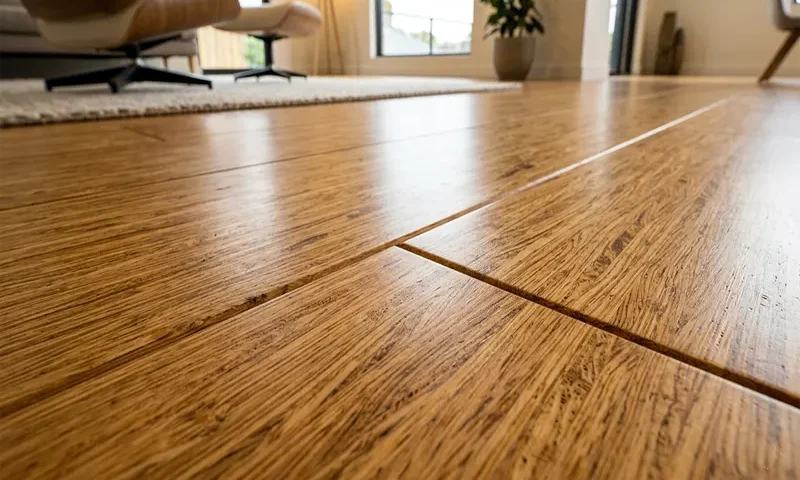
When it comes to high-traffic flooring, the search for the perfect balance between durability, aesthetics, and sustainability often leads to a single, impressive contender: Strand Woven Bamboo.
While traditional bamboo earned a reputation for being somewhat soft and prone to scratching, the engineering behind the “strand woven” variety has completely redefined the category. For homeowners in 2026, where the demand for eco-friendly yet “life-proof” materials is at an all-time high, understanding the nuances of this material is essential.
What Exactly is Strand Woven Bamboo?
To understand why this flooring excels in hallways and kitchens, one must understand its origin. Unlike traditional bamboo flooring, which is made by gluing together flat strips of the plant (horizontal or vertical grain), strand woven bamboo is created through a process of intense transformation.
The raw bamboo stalks are shredded into long, fibrous “strands.” These strands are then soaked in high-quality resins and compressed under immense hydraulic pressure to form solid blocks. These blocks are then milled into planks. This process creates a density that is far superior to the natural plant, resulting in a floor that is essentially a high-density fiber composite with the soul of a natural wood.
The Janka Hardness Factor: A Comparison
The primary metric for flooring durability is the Janka Hardness Scale, which measures the force required to embed a small steel ball halfway into the wood. In high-traffic areas, a higher Janka rating translates directly to fewer dents from dropped cans, high heels, or pet claws.
| Flooring Type | Janka Rating (lbf) | Performance in High Traffic |
| Strand Woven Bamboo | 3,000 – 3,500+ | Extreme |
| Brazilian Cherry | 2,350 | Excellent |
| Hard Maple | 1,450 | Moderate |
| Red Oak (Industry Benchmark) | 1,290 | Moderate |
| Traditional Bamboo | 1,180 – 1,380 | Low |
As shown above, strand woven bamboo is often twice as hard as Red Oak, making it one of the toughest natural flooring options available on the market today.
The Pros: Why It Thrives in Busy Homes
1. Incredible Dent Resistance
In a household with children, large dogs, or frequent guests, the floor is under constant siege. Strand woven bamboo’s high density makes it nearly impervious to the “pockmarking” that plagues softer woods like pine or even some oaks.
2. A Leading Sustainability Story
Bamboo is a grass, not a tree. It reaches maturity in 5–7 years, whereas hardwoods can take 30–50 years. This rapid renewal cycle makes it the gold standard for eco-conscious renovations. Furthermore, many modern manufacturers utilize FSC-certified (Forest Stewardship Council) bamboo to ensure responsible harvesting.
3. Cost-Effectiveness
Despite its premium performance, strand woven bamboo typically costs significantly less than exotic hardwoods like Ipe or Mahogany. It allows for a “luxury” look and industrial-grade durability on a mid-range budget.
4. Unique Aesthetic Appeal
The weaving process creates a variegated, “marbled” grain that many find more interesting than the repetitive grain of traditional timber. It fits seamlessly into both warm minimalist designs and industrial modern aesthetics.
The Cons: Potential Pitfalls
1. Sensitivity to Humidity
Despite its hardness, bamboo is still a natural fiber. It is highly hygroscopic, meaning it absorbs moisture from the air. In very humid or extremely dry climates, the planks can expand or contract, leading to cupping or gaps if the home’s HVAC system doesn’t maintain a consistent environment.
2. VOC and Resin Quality
Because the strands are bonded with adhesive, the quality of that glue matters. Cheaper, off-brand bamboo may use resins containing Urea-Formaldehyde, which can off-gas into the home. It is vital to look for “FloorScore” or “CARB Phase 2” compliant products.
3. Refinishing Challenges
Because the material is so dense and the “grain” is a chaotic mix of fibers, refinishing strand woven bamboo is a labor-intensive process. You cannot simply sand it down like traditional oak; it requires specialized equipment and expertise.
4. Impact on Comfort
The very hardness that makes it durable can also make it unforgiving. Dropped glassware is almost guaranteed to shatter, and standing on it for long periods (e.g., while cooking) can be tougher on the joints than softer surfaces like cork or linoleum.
High-Traffic Performance Analysis
For Pet Owners
If you own a high-energy breed like a Border Collie or a large retriever, your main concern is “scratch-and-slide.” Strand woven bamboo holds up remarkably well against “zoomies,” and the multi-tonal grain often hides the inevitable micro-scratches better than a flat-stained hardwood.
For Kitchens and Mudrooms
While it handles foot traffic excellently, standing water is the enemy. In a kitchen, a leak from a dishwasher left unnoticed can cause the core of the bamboo to swell. It is highly recommended to use high-quality transitions and ensure the floor is “floated” or “glued” with a high-grade moisture barrier.
Buyer’s Checklist: 5 Tips for Success
Before you purchase, ensure your choice meets these standards:
- Check the Formaldehyde Rating: Look for “NAUF” (No Added Urea Formaldehyde) or “Ultra-low” emissions labels.
- Janka Verification: Confirm the specific product has a rating above 2,800 lbf.
- Finish Layers: High-quality planks should have 7–10 coats of aluminum oxide finish for surface scratch resistance.
- Acclimation Time: Ensure the flooring sits in the room where it will be installed for at least 72 hours to adjust to the local humidity.
- Warranty: Look for a “Lifetime Structural” and at least a “25-year Residential Finish” warranty.
The Final Verdict
For high-traffic areas, strand woven bamboo is a top-tier choice. It outclasses almost every traditional hardwood in terms of raw durability and offers a sustainability profile that is hard to beat.
While you must be diligent about moisture control and indoor air quality certifications, the “Pros”—specifically the peace of mind that comes from a floor that won’t dent under the pressure of a busy life—far outweigh the “Cons” for most modern households. If you want a floor that looks like a luxury timber but performs like a suit of armor, strand woven bamboo is the answer.

